

The demand for solar power is growing rapidly, and with it, the pressure on solar manufacturers to stay competitive and meet global energy needs. As the world continues to embrace renewable energy, manufacturers are looking for ways to keep up with this accelerating pace. The key to staying ahead in this race is Artificial Intelligence.
This blog explains how AI is helping solar manufacturers improve their processes, cut costs, and deliver better products, ultimately making it an essential part of the solar industry’s future.
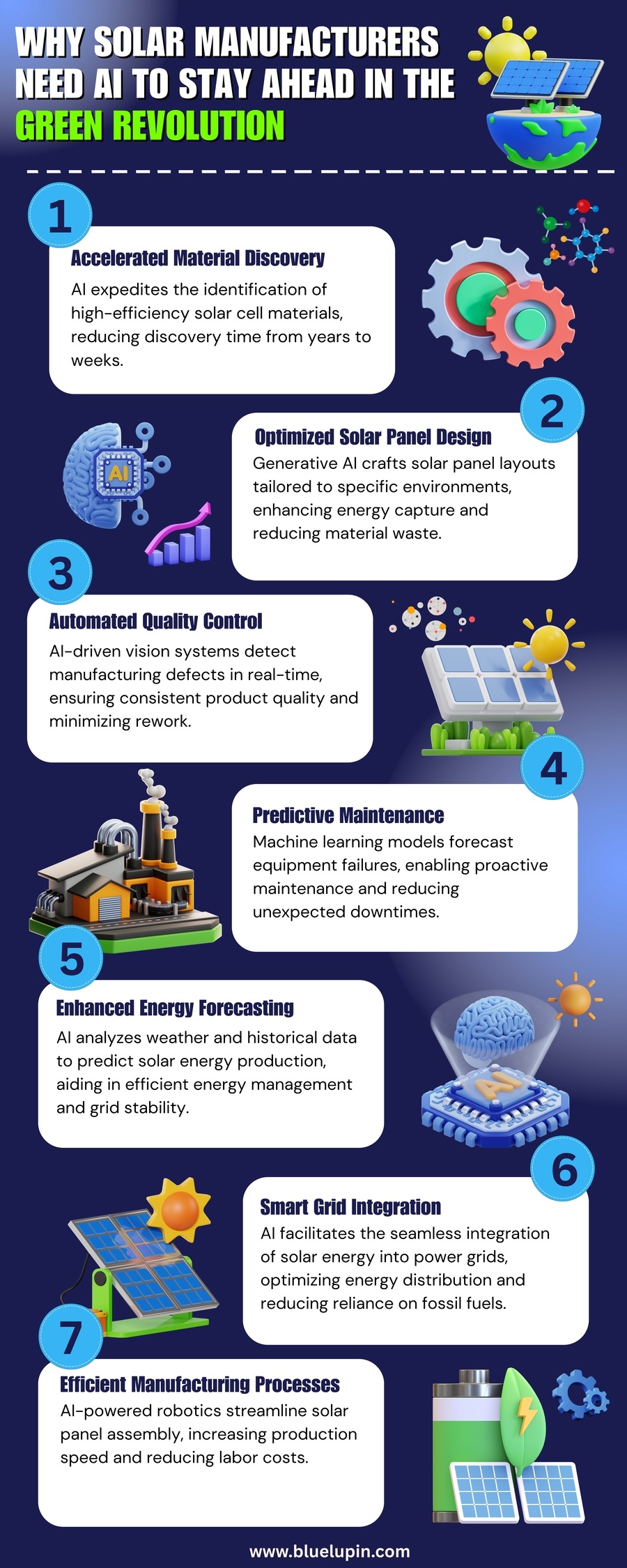
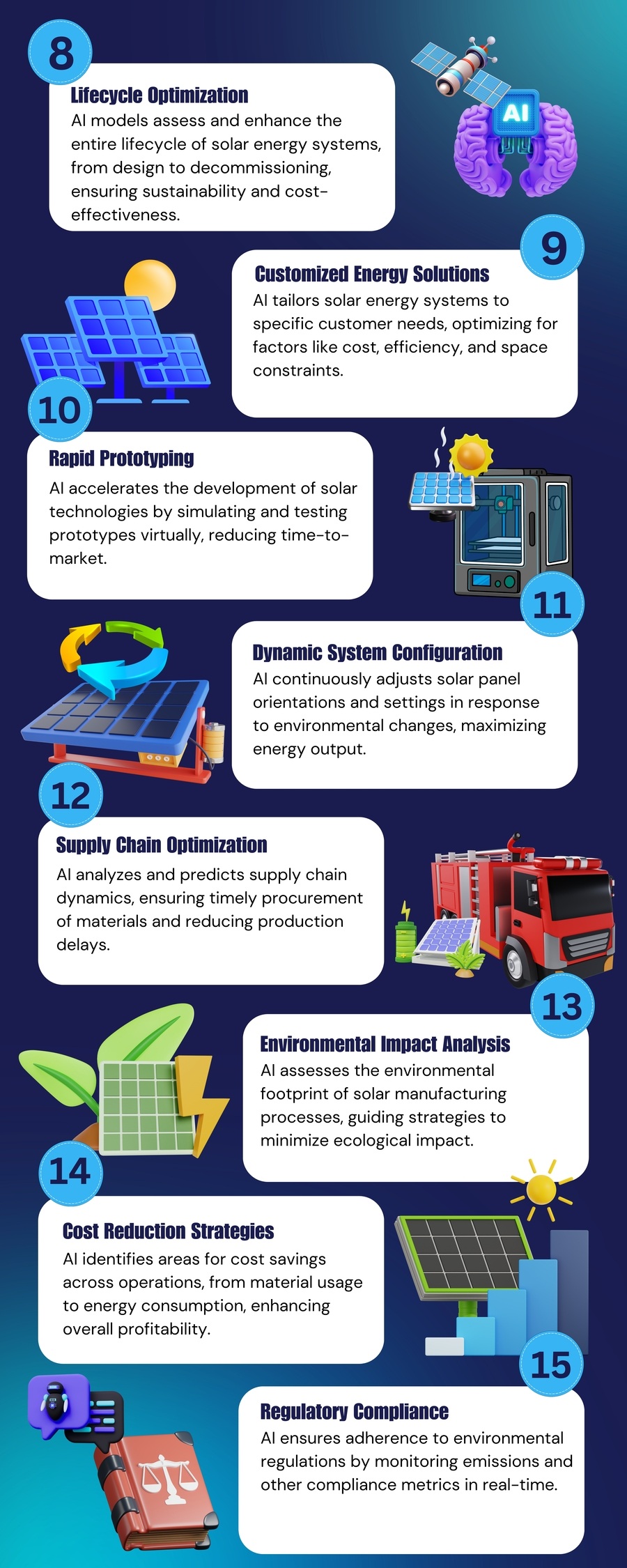
And before we dive into the details, be sure to check out the infographic below for a quick, visual breakdown of how AI is shaping the future of solar manufacturing.
Why It’s Time for Solar Manufacturers to Use AI
The solar industry is growing quickly. As more companies move toward greener energy sources, manufacturers need a reliable way to produce high-quality, affordable products at scale. AI offers the tools needed to meet these challenges. It can speed up production, improve efficiency, and reduce costs, all of which are crucial for staying competitive in this fast-paced market.
AI helps manufacturers stay ahead by providing smarter solutions to the problems they face every day. From faster production to more precise designs, this technology provides a real opportunity for businesses in the solar industry to stay relevant.
How AI Helps Solar Manufacturers Stay Ahead
AI makes a difference in every aspect of solar manufacturing. Here’s how it plays a role:
- Faster Material Discovery: Finding the right materials for solar panels is a complex process. AI helps speed up material discovery by analyzing vast amounts of data and quickly identifying the best options. This helps manufacturers create more efficient and cost-effective solar panels.
- Optimized Solar Panel Designs: With AI, manufacturers can design solar panels that are better suited for various environmental conditions. AI simulations help find designs that work best for energy output and durability, reducing waste during production.
- Smarter Production: AI improves production workflows. With automation and smart machines, the process becomes more precise and less prone to errors. This helps manufacturers produce more panels in less time while maintaining high quality.
- Predictive Maintenance: Preventing breakdowns before they happen saves money and time. AI can predict when equipment is likely to fail, which helps manufacturers keep their production lines running smoothly.
Who’s Already Using AI in Solar Manufacturing?
Some leading companies in the solar industry have already adopted AI to improve their manufacturing processes. First Solar, for example, uses AI to streamline production and ensure the quality of their solar panels. Their use of AI helps them deliver high-quality products at a quicker pace, meeting growing demand more efficiently.
Tesla is another notable company integrating AI into their solar division. Their AI-driven manufacturing systems help produce solar panels and solar roofs more efficiently, ensuring they remain a leader in renewable energy production.
These companies show that integrating AI into solar manufacturing isn’t just possible, it’s already happening and proving beneficial.
Why Solar Manufacturers Need AI Now
The shift to solar energy isn’t slowing down. In fact, demand is growing as more people and businesses opt for renewable energy sources. However, traditional manufacturing methods alone are no longer enough to meet this demand. AI offers a way for solar manufacturers to scale their production while maintaining product quality and cutting costs.
- Meeting Growing Demand: With AI, manufacturers can produce more solar panels at a faster rate, helping meet the increasing need for renewable energy across the globe.
- Lowering Costs: AI can help manufacturers reduce operational costs by optimizing production processes and minimizing waste.
- Sustainability: AI-driven systems help ensure solar panels are designed and manufactured with sustainability in mind, making them more energy-efficient and longer-lasting.
Key Benefits of AI in Solar Manufacturing
- Efficiency: AI makes processes more efficient by automating tasks, reducing human error, and streamlining workflows.
- Quality Control: AI improves quality control by detecting defects early on, ensuring that only top-quality solar panels reach the market.
- Predictive Insights: AI helps manufacturers predict the performance of solar panels and identify potential issues, which leads to more reliable products.
- Sustainability: AI contributes to sustainability by reducing waste during production and optimizing the use of materials, helping manufacturers meet environmental goals.
How AI Helps Solar Manufacturers Stay Competitive
At our software company in Delhi, we understand the importance of adopting AI for business success. As AI technologies become more accessible, it’s crucial for solar manufacturers to incorporate these tools into their operations.
AI solutions like OpenAI chatbots can help businesses interact with customers more efficiently, automate data collection, and improve decision-making processes. These tools don’t just optimize production, they also improve communication and customer service, helping businesses stay connected to their clients in a fast-paced market.
Be sure to check out the infographic below. It breaks down the key points we’ve discussed and shows you just how AI can help your business stay ahead in the renewable energy sector.
Conclusion
As the solar industry grows, AI is becoming essential for manufacturers who want to remain competitive. It helps optimize the production process, improve design, and enhance sustainability. For solar manufacturers, adopting AI now is not just an option, it’s a necessity.
For those ready to take the next step, it’s time to integrate AI into your processes and stay ahead in the green revolution. Don’t miss out on the opportunity to innovate, reduce costs, and increase efficiency.