Your Web App Sucks? Here’s the Brutal Truth About What You’re Doing Wrong

Introduction
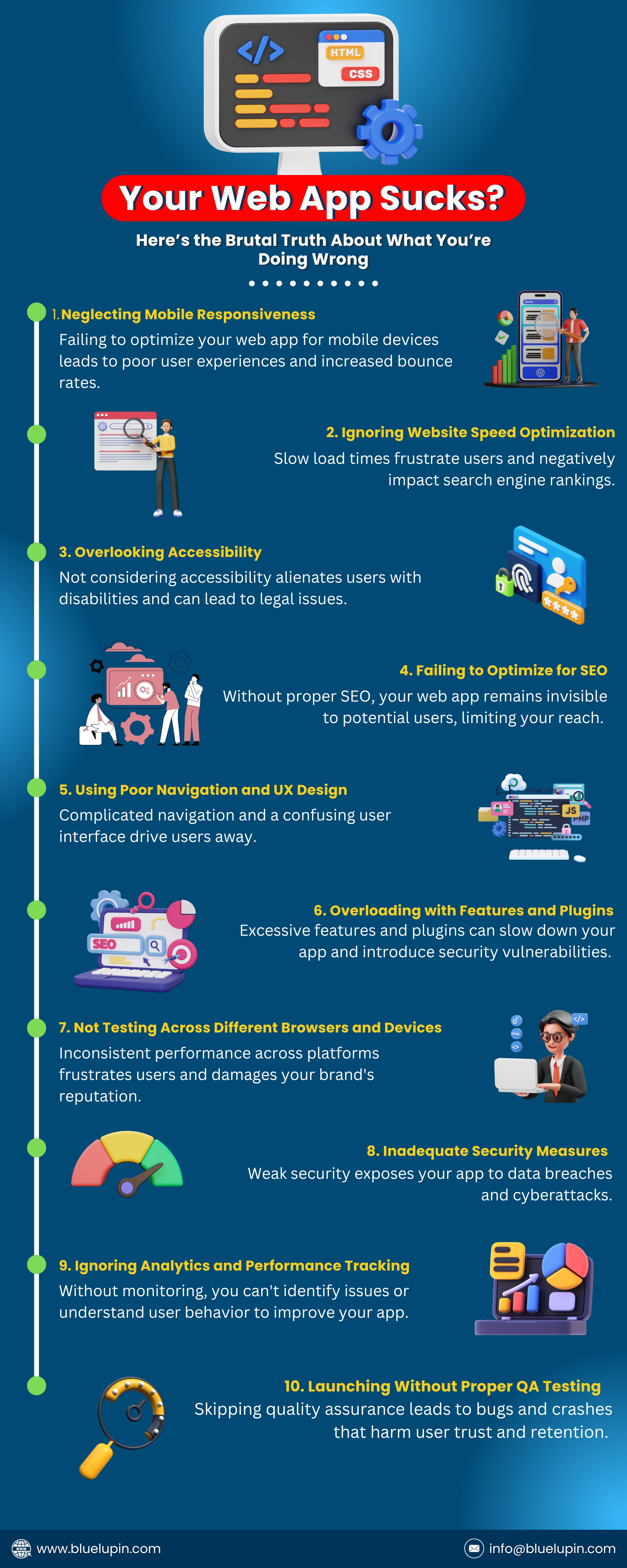
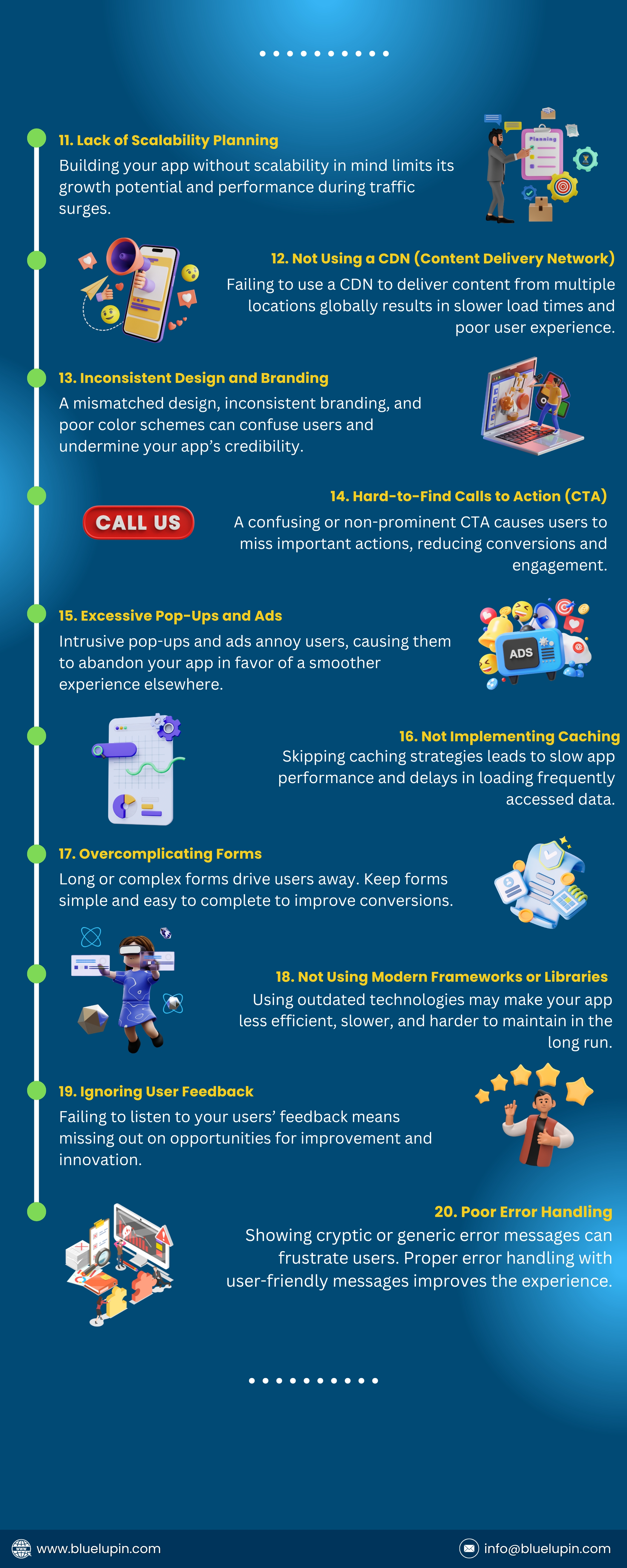
Ever launched a web app only to see users abandon it within seconds? The reality is, users today have sky-high expectations. If your web app is slow, confusing, or cluttered, they’ll move on without giving it a second thought. Many developers unknowingly sabotage their own projects by neglecting key areas like performance, UX, and scalability.
But here’s the good news: You can fix this.
Instead of making the common mistakes outlined in our infographic attached below, let’s talk about what you should do right to ensure your web app not only survives but thrives.
Understand Your Users Before Writing Any Code
A web app that doesn’t address real problems is unlikely to succeed. Developers often make assumptions about user needs without conducting proper research, which results in a product that fails to connect with its audience.
What to Do
- Conduct market research to identify user challenges.
- Analyze competitors to find gaps in the market.
- Build user personas to design features based on real preferences.
What NOT to Do
- Rely on guesswork instead of real data.
- Assume that all users have the same expectations.
Focus on UX and Mobile Compatibility
A successful web app provides a seamless experience. A cluttered interface, confusing navigation, or poor mobile optimization will frustrate users and drive them away.
What to Do
- Design an intuitive interface with straightforward navigation.
- Ensure mobile compatibility as a large number of users browse on smartphones.
- Make call-to-actions (CTAs) visible and easy to interact with.
What NOT to Do
- Hide essential buttons behind complex menus.
- Overlook mobile responsiveness, this is a priority, not an afterthought.
Prioritize Speed and Performance
A web app that takes too long to load loses users almost instantly. Slow response times also affect search rankings, making it harder for people to find your platform.
What to Do
- Optimize images, scripts, and code to improve loading times.
- Use Content Delivery Networks (CDNs) to serve content quickly.
- Implement caching strategies for frequently used data.
What NOT to Do
- Load the app with unnecessary features and plugins.
- Delay performance improvements until after launch.
Choose Scalable Technologies
If your web app is unable to handle growth, crashes and performance issues will follow as more users sign up.
What to Do
- Pick a technology stack that allows for expansion.
- Use cloud-based hosting for flexibility and faster deployment.
- Structure the database to handle high traffic efficiently.
What NOT to Do
- Develop with outdated technologies that limit growth.
- Overlook future traffic surges when designing infrastructure.
Security Should Never Be Overlooked
Weak security measures expose your app to cyber threats, data breaches, and legal issues. Users trust platforms that protect their information.
What to Do
- Implement strong authentication methods like 2FA and OAuth.
- Encrypt sensitive user data.
- Conduct regular security audits to find vulnerabilities.
What NOT to Do
- Use weak passwords or store data insecurely.
- Assume the app is safe without testing for risks.
SEO and Visibility Matter
If your web app isn’t showing up in search results, potential users won’t find it.
What to Do
- Optimize page speed, metadata, and content for search engines.
- Use structured data to help search engines understand your pages.
- Leverage social media marketing and email campaigns for outreach.
What NOT to Do
- Ignore SEO until after the app is launched.
- Depend entirely on paid ads for visibility.
Continuous Testing and Feedback Drive Improvements
A web app is never finished. Regular testing and real-world feedback help refine the user experience.
What to Do
- Conduct usability tests with real users before launch.
- Set up a feedback system to collect suggestions and complaints.
- Monitor analytics to track user behavior and make improvements.
What NOT to Do
- Skip quality assurance (QA) testing before release.
- Dismiss user feedback and analytics insights.
Many developers struggle with these fundamentals, but avoiding the mistakes that we have mentioned in our infographic below will set you on the right path.
Conclusion
Web application development is not just about writing code, it’s about crafting an experience that people genuinely enjoy. Every decision, from user interface design to backend performance, plays a role in determining whether your web app gains traction or fades into obscurity just like 97% of your competitors.
Key Takeaways
1. Begin with market research and real user data.
2. Prioritize UX, speed, and security from the start.
3. Design for scalability, SEO, and long-term performance.
4. Keep improving based on analytics and user feedback.
Now, ask yourself, are you building a web app people will actually enjoy using?