AI Chatbots Aren’t Magic – Stop Believing the Lies and Learn How They Really Work
The Technology Behind the Illusion of Intelligence
AI chatbots have transformed the way businesses interact with customers, automate workflows, and handle inquiries. They’re available 24/7, respond instantly, and scale effortlessly. But despite their remarkable capabilities, AI chatbots are not sentient beings or digital oracles—they are highly sophisticated probability engines, generating responses based on patterns rather than true understanding.
The widespread perception of chatbots as “thinking” entities is fueled by marketing hype and Hollywood fiction. In reality, these AI-driven systems rely on complex algorithms, training data, and computational power to predict and generate responses. Their effectiveness depends on how well they process language, retrieve information, and handle context.
The Illusion of Intelligence: How Chatbots Seem So Smart
When you chat with an AI assistant, it feels like it understands you. It remembers parts of the conversation, responds with relevant details, and even adapts its tone. This illusion of intelligence is created through:
- Massive Language Models: AI chatbots are trained on vast text corpora, learning patterns in language rather than actual meaning.
- Natural Language Processing (NLP): They break down text into structured data to extract meaning and respond appropriately.
- Context Awareness: Some models retain conversational history to make interactions feel more natural.
- Integration with APIs & Databases: Many chatbots fetch real-time data from external sources to provide accurate responses.
Yet, these systems have clear limitations. They cannot think independently, question their knowledge, or truly “understand” like humans do. Their responses are driven by data, and when faced with uncertainty, they often generate the most statistically probable answer—whether it’s correct or not.
Beyond the Hype: What Really Makes AI Chatbots Work?
Chatbots are not one-size-fits-all. The complexity of their architecture depends on the use case:
- Rule-based chatbots operate on predefined scripts, handling only specific queries.
- AI-powered chatbots use machine learning to generate responses dynamically, making them more flexible.
- Hybrid models combine both, ensuring reliability while allowing adaptability.
Understanding these differences is crucial for businesses looking to implement AI chatbots effectively. An advanced chatbot may handle complex queries and multiturn conversations, while a simpler model might only provide scripted responses.
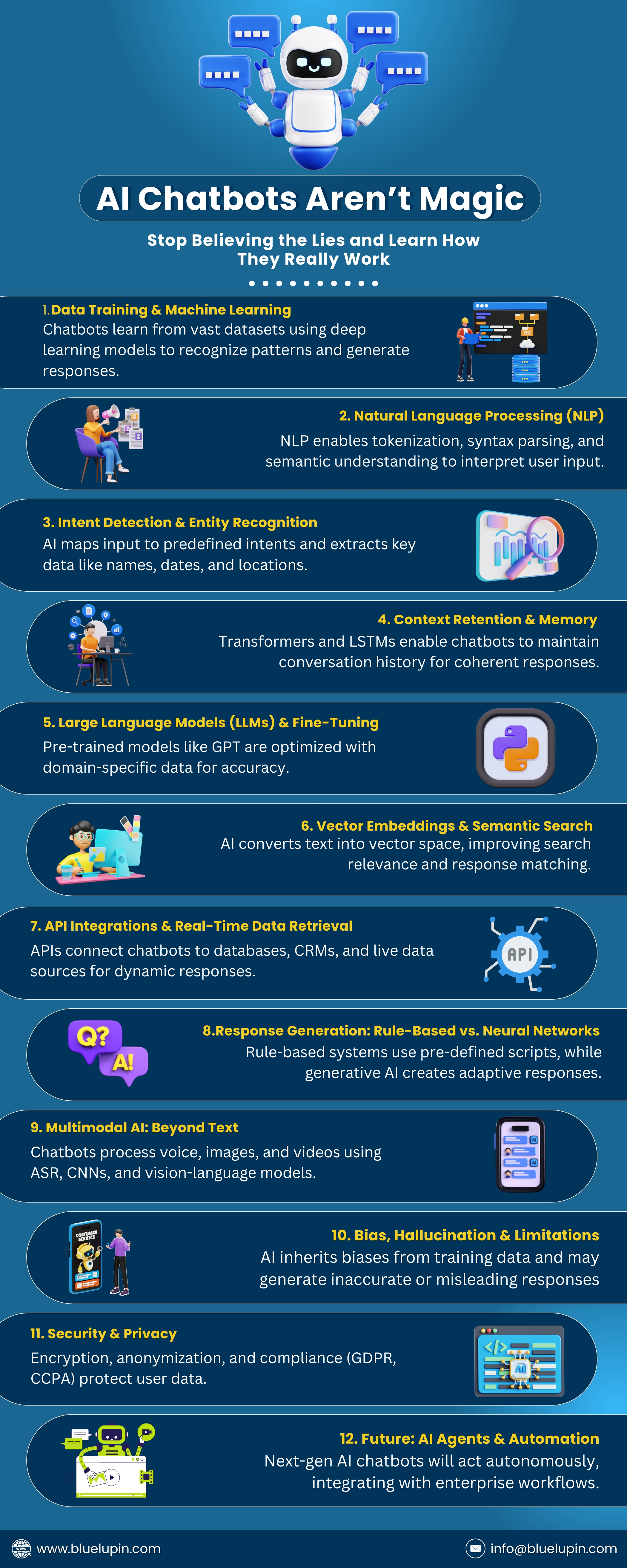
To break down the technical workings of AI chatbots, we’ve created an infographic that highlights the key processes behind their functionality. Check it out below to see how these systems truly operate.
Conclusion
AI chatbots are powerful tools for automation, customer service, and engagement, but they are not magic. They function based on data, probability, and algorithms rather than true intelligence. While advancements in AI continue to push the boundaries of what chatbots can do, it’s essential to understand their limitations and capabilities. By leveraging AI effectively, businesses can enhance customer interactions, streamline operations, and stay ahead in the digital age.