
How Websites Earn $1M+ Monthly – And How You Can Do It Too

Introduction
Imagine, you wake up one morning to find that your website has made over $1 million while you were sleeping. It sounds like a fantasy, right? But for many successful online entrepreneurs, this is a reality achieved through smart planning and creative ways to make money. The internet has opened doors for anyone with a good idea and the right approach to build a profitable online business.
In this article, we’ll dive into the world of high-earning websites and share the key strategies that can help you achieve similar success. Whether you’re just starting out or looking to grow an existing site, this guide will give you practical tips and inspiration to help you on your journey.
Understanding the Revenue Streams of Million-Dollar Websites
Successful websites use a mix of strategies to earn big money. Knowing about these different ways to make money is essential if you want to create a profitable online business.
1. Advertising: Making Money from Visibility
Advertising is one of the most common ways websites make money. By using platforms like Google AdSense, site owners can display ads that earn them money based on how many people click on them or see them. However, many successful websites go beyond just using ad networks.
- Direct Ad Sales: Websites with lots of visitors can sell ad space directly to companies, often making more money than they would through ad networks.
- Programmatic Advertising: This automated system helps websites manage their ads in real-time, ensuring they get the best possible rates while showing relevant ads to users.
2. Subscription-Based Models: Creating Loyal Customers
Subscription models are becoming increasingly popular across various industries. They allow users to pay a recurring fee for exclusive content or services, which not only provides steady income but also builds a loyal customer base.
- News & Media: Many news websites now charge subscriptions for premium articles and in-depth reporting that readers value.
- Software & Tools: SaaS (Software as a Service) platforms let users access software tools for a monthly fee, ensuring consistent cash flow.
3. E-commerce & Dropshipping: Cashing in on Online Shopping
E-commerce has changed how people shop, and savvy website owners are taking advantage of this trend by setting up online stores or using dropshipping models.
- E-commerce Stores: Platforms like Amazon and Shopify allow entrepreneurs to create their own online shops, selling everything from niche products to popular items.
- Dropshipping: This model lets you sell products without keeping any inventory. When someone buys something from your site, the supplier ships it directly to the customer, reducing risk and costs.
4. Affiliate Marketing: Earning by Promoting Products
Affiliate marketing is another great way for websites to make money. By promoting products from other companies and earning commissions on sales made through referral links, website owners can effectively monetize their traffic.
- Niche Affiliate Sites: These sites focus on specific topics or products, attracting audiences who are more likely to buy what they’re promoting.
- Influencer Partnerships: Teaming up with influencers can boost affiliate marketing efforts by driving traffic and sales through trusted recommendations.
5. SaaS & Digital Products: Low Costs with High Returns
Digital products are becoming increasingly popular as revenue streams for website owners. SaaS businesses offer subscription-based access to software solutions, while digital products like online courses and memberships provide valuable content without needing physical inventory.
- Online Courses: Creating and selling online courses can be very profitable, especially when targeting specific markets with high demand for knowledge.
- Membership Sites: These platforms offer exclusive content or community access for a monthly fee, creating reliable income opportunities.
6. Lead Generation & Service-Based Monetization: Connecting Businesses with Customers
Websites can also thrive by generating leads for other businesses or offering services directly to clients.
- Lead Generation: Industries like real estate and finance depend heavily on qualified leads. Websites that excel at capturing leads can sell them to businesses looking for new clients.
- Service-Based Models: If you have expertise in a particular area, offering consulting or freelance services through your website can yield high returns.
7. Community-Driven & Crowdfunding Models: Tapping into Support from Fans
Community-driven monetization strategies have become popular as creators seek direct support from their audiences.
- Patreon & OnlyFans: These platforms allow creators to earn money through subscriptions from fans who appreciate their work.
- Crowdfunding Platforms: Websites like Kickstarter enable entrepreneurs to raise funds for new projects by appealing directly to potential customers who believe in their vision.
Case Studies: Websites Earning $1M+ Monthly
Example 1: NerdWallet ($10M+ per month from affiliate marketing)

NerdWallet is a prime example of how a well-executed affiliate marketing strategy can lead to massive revenue. With an impressive average monthly income exceeding $10 million, NerdWallet primarily earns through affiliate commissions by helping users find the best financial products. Their business model is straightforward yet effective: they provide valuable tools and resources that guide users in making informed financial decisions.
The site attracts traffic through a combination of search engine optimization (SEO), content marketing, and targeted advertising. By creating high-quality articles and comparison tools for products like credit cards, loans, and insurance, NerdWallet draws in millions of visitors each month—over 18 million, to be precise.
Example 2: Shopify ($100M+ monthly in SaaS and e-commerce)

Shopify has revolutionized the way entrepreneurs start their online businesses, generating over $100 million monthly through its SaaS (Software as a Service) platform and e-commerce solutions. The company attracts businesses by offering an easy-to-use platform that simplifies the process of setting up an online store.
Shopify’s marketing strategy includes extensive educational resources, such as blogs, webinars, and tutorials that empower entrepreneurs to succeed in e-commerce. They also leverage partnerships with influencers and successful brands to showcase real-life success stories, creating a sense of community around their platform.
Example 3: The New York Times ($1M+ per month in subscriptions)

The New York Times employs a multi-faceted approach to attract subscribers. They offer a range of subscription options tailored to different interests—news, cooking, games, and more—allowing users to choose what best suits their needs. Their marketing strategy includes engaging social media campaigns and targeted email newsletters that highlight popular articles and exclusive content available only to subscribers. By continually enhancing their digital offerings with interactive features and multimedia content, they keep readers engaged and encourage them to maintain their subscriptions.
Other Notable Mentions
Several other websites have also achieved remarkable success in generating over $1 million monthly:
- Wirecutter: This product review site earns revenue through affiliate marketing by recommending various consumer goods.
- Udemy & Coursera: These online learning platforms generate substantial income from course sales and subscriptions.
- HubSpot: Known for its inbound marketing software, HubSpot makes money through subscription fees from businesses seeking robust marketing solutions.
- OnlyFans: This subscription-based platform allows creators to earn money directly from fans, showcasing the power of community-driven monetization.
The Core Formula Behind Million-Dollar Websites
Building a million-dollar website isn’t just about luck; it involves a strategic approach that combines several key elements:
1. High-Traffic Volume
Successful websites attract large volumes of traffic through effective SEO strategies, paid advertising campaigns, and viral marketing tactics. By optimizing content for search engines and utilizing social media platforms for promotion, these sites ensure they reach a broad audience.
2. Strong Monetization Strategy
Matching the right revenue model to the target audience is crucial. Whether it’s affiliate marketing, subscriptions, or e-commerce sales, understanding what resonates with your audience can significantly impact profitability.
3. Scalable Growth Mechanisms
To sustain growth, million-dollar websites implement systems that allow for scalability. This includes automation tools for marketing and customer service as well as delegating tasks to team members or freelancers.
4. Effective User Retention
Keeping users engaged is as important as attracting them in the first place. Successful websites employ strategies such as email marketing campaigns, membership programs, and community-building efforts to foster loyalty among their audience.
5. Strategic Partnerships & Collaborations
Leveraging partnerships with other platforms or influencers can amplify reach and credibility. Collaborations often lead to cross-promotion opportunities that benefit all parties involved.
How You Can Build a High-Revenue Website
Creating a website that generates over $1 million monthly is an ambitious goal, but with the right steps, it’s entirely achievable. Here’s a detailed guide on how to build a high-revenue website, focusing on essential strategies that can lead you to success.
Step 1: Choose a Profitable Niche
The first step in building a high-revenue website is selecting a profitable niche. This involves conducting thorough market research to identify industries with high traffic and revenue potential. Use tools like Google Trends, SEMrush, or Ahrefs to analyze search volumes and competition levels for various topics. Look for gaps in the market where demand exceeds supply; this could be emerging trends or underserved audiences.
Once you’ve identified potential niches, validate your ideas by testing them with real audiences. Create surveys or use social media polls to gauge interest. The more specific your niche, the better you can tailor your content and offerings to meet the needs of your target audience.
Step 2: Build a High-Quality Website
Now that you have your niche, it’s time to create a high-quality website. Your site should be fast-loading, SEO-optimized, and mobile-friendly to ensure a good user experience. Research shows that users are more likely to leave a site that takes longer than three seconds to load.
Choose the right Content Management System (CMS) based on your needs. WordPress is popular for its flexibility and vast plugin ecosystem, while Shopify is ideal for e-commerce sites.
Invest in professional design and user experience (UX). A clean, intuitive layout not only enhances user engagement but also encourages visitors to explore more of your content.
Step 3: Traffic Generation Strategies
Generating traffic is crucial for any website aiming for high revenue. Here are some effective strategies:
- SEO: Start with keyword research to identify terms your audience is searching for. Create valuable content around these keywords and optimize on-page elements like titles, headings, and meta descriptions. Building backlinks from reputable sites can also improve your search rankings.
- Paid Ads: Utilize platforms like Facebook Ads and Google Ads to reach targeted audiences quickly. Influencer marketing can also be effective; partner with influencers in your niche who can promote your site to their followers.
- Social Media & Community Growth: Engage with potential users on platforms like YouTube, TikTok, Reddit, and Quora. Share valuable content and participate in discussions relevant to your niche to build credibility and attract traffic back to your site.
Step 4: Monetization Optimization
Once you have traffic flowing to your site, it’s time to focus on monetization. Match monetization methods to your audience’s preferences—whether through affiliate marketing, subscriptions, or selling products directly.
To maximize conversions:
- A/B Testing: Regularly test different versions of landing pages or calls-to-action (CTAs) to see which performs better.
- Analytics: Use tools like Google Analytics to track user behavior on your site. Understanding where users drop off can help you make necessary adjustments.
Step 5: Scaling to $1M+ Monthly
Scaling up requires strategic planning and execution:
- Hiring a Team & Automating Processes: As your website grows, consider hiring team members or freelancers for content creation, marketing, or customer service tasks. Automation tools can help streamline processes such as email marketing or social media posting.
- Expanding Revenue Streams: Diversification is key; explore additional monetization avenues such as sponsored content, online courses, or premium memberships that align with your audience’s interests.
- Leveraging Partnerships and Sponsorships: Collaborate with other businesses or influencers in your niche for cross-promotional opportunities. Sponsorships can also provide significant income if you have a large enough audience.
Common Mistakes That Prevent Websites from Scaling
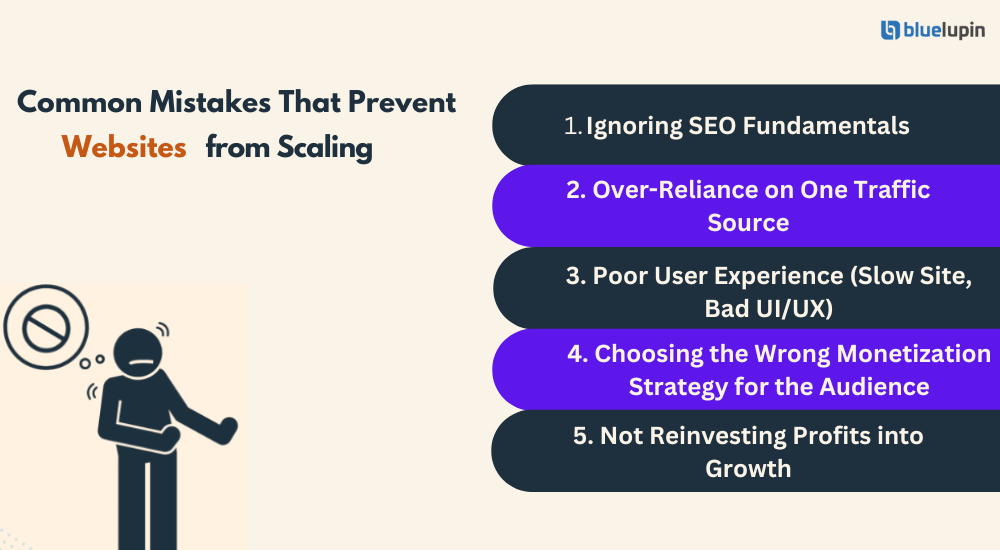
Building a successful website that scales to generate significant revenue is no easy feat, and many aspiring entrepreneurs stumble along the way. Here are some common mistakes that can hinder your website’s growth and profitability:
Ignoring SEO Fundamentals
One of the biggest pitfalls is neglecting the fundamentals of search engine optimization (SEO). Without a solid SEO strategy, your website may struggle to rank in search engine results, severely limiting your organic traffic. Ignoring SEO means missing out on potential visitors who are actively searching for content related to your niche. Key practices include optimizing title tags, meta descriptions, and using relevant keywords throughout your content. Additionally, maintaining a clean site structure with proper internal linking can enhance user experience and improve search engine rankings. Regularly updating content and ensuring your site is mobile-friendly are essential practices that can significantly impact your visibility online.
Over-Reliance on One Traffic Source
Many website owners make the mistake of depending heavily on a single traffic source, such as social media or Google Ads. While these channels can drive significant traffic initially, they are often unpredictable and can change without warning due to algorithm updates or shifts in user behavior. Relying too much on one source can leave you vulnerable if that channel underperforms or becomes less effective. To mitigate this risk, diversify your traffic sources by incorporating SEO, email marketing, content marketing, and other social platforms. This multi-faceted approach creates a more stable and resilient flow of visitors to your site.
Poor User Experience (Slow Site, Bad UI/UX)
User experience (UX) plays a crucial role in retaining visitors and converting them into customers. A slow-loading website or one with a confusing layout can frustrate users and lead to high bounce rates. Research shows that users are likely to abandon a site that takes longer than three seconds to load. To enhance UX, ensure that your site loads quickly by optimizing images and leveraging caching solutions. Additionally, create a mobile-friendly design that adapts seamlessly to different devices. An intuitive navigation structure is also vital; users should easily find what they’re looking for without unnecessary clicks. Regularly test your site’s performance using tools like Google PageSpeed Insights and gather user feedback to identify areas for improvement.
Choosing the Wrong Monetization Strategy for the Audience
Selecting a monetization method that does not align with your audience’s needs can be detrimental to your website’s success. For example, if your audience prefers free content but you opt for a subscription model, you may struggle to convert visitors into paying customers. It’s crucial to conduct audience research to understand their preferences and behaviors before deciding on a monetization strategy. Consider offering multiple options—such as affiliate marketing links, ads, or premium content—to cater to different segments of your audience.
Not Reinvesting Profits into Growth
Finally, many website owners fail to reinvest profits back into their business. To scale effectively, it’s important to allocate funds toward marketing efforts, hiring skilled team members, or improving technology and infrastructure. This investment can lead to exponential growth; for instance, hiring content creators can enhance the quality and quantity of your offerings while investing in paid advertising can significantly boost traffic. Treating profits as an opportunity for growth rather than personal income is essential for long-term success.
Conclusion
In summary, building a high-revenue website requires careful planning and execution. The key lessons from successful million-dollar websites emphasize the importance of choosing the right niche, creating a high-quality user experience, diversifying traffic sources, implementing effective monetization strategies, and continually reinvesting in growth.
Actionable Steps for Readers:
- Conduct Market Research: Identify profitable niches with high demand by using tools like Google Trends or SEMrush.
- Optimize Your Website: Ensure it is fast-loading and user-friendly by testing its performance regularly.
- Diversify Traffic Sources: Use SEO techniques alongside paid ads and social media outreach to attract visitors from multiple channels.
- Align Monetization Strategies: Choose methods that resonate with your audience by conducting surveys or analyzing competitors.
- Reinvest Profits: Allocate funds towards marketing efforts, hiring skilled personnel, or upgrading technology.
Remember that building a successful website is a journey filled with learning opportunities. Stay adaptable and persistent as you implement these strategies—your million-dollar website could be just around the corner! Embrace the challenges ahead as stepping stones toward achieving your goals in the digital landscape.
FAQs
1. How do websites earn money with ads?
Websites earn money through advertising by displaying ads on their pages. The most common methods include pay-per-click (PPC) advertising, where advertisers pay each time a user clicks on an ad, and cost per impression (CPI/CPM), where payment is based on the number of times an ad is shown. Ad networks like Google AdSense help website owners manage these ads and track revenue.
2. How is money earned from a website?
Money can be earned from a website through various methods, including advertising (PPC and CPM), affiliate marketing (earning commissions by promoting products), selling digital or physical products, offering services, and creating subscription-based content. The key is to choose the right monetization strategy that aligns with your audience’s interests.
3. Which website is best for earning money?
There isn’t a one-size-fits-all answer, as the best website for earning money depends on your niche and audience. However, popular platforms for monetization include blogs (using affiliate marketing), e-commerce sites (selling products), and membership sites (offering exclusive content). Websites like Shopify for e-commerce and WordPress for blogging are often recommended.
4. How to create a website for free on Google and earn money in India?
To create a free website using Google, you can use Google Sites or Blogger. After setting up your site, focus on creating valuable content that attracts visitors. You can monetize through Google AdSense by applying for an account once you have enough traffic. Remember to comply with AdSense policies to start earning.
5. Can I monetize my free website?
Yes, you can monetize a free website. Many platforms allow you to display ads, use affiliate marketing links, or sell digital products even on free sites. However, keep in mind that some limitations may apply depending on the platform you choose, so it’s essential to review their policies regarding monetization.
